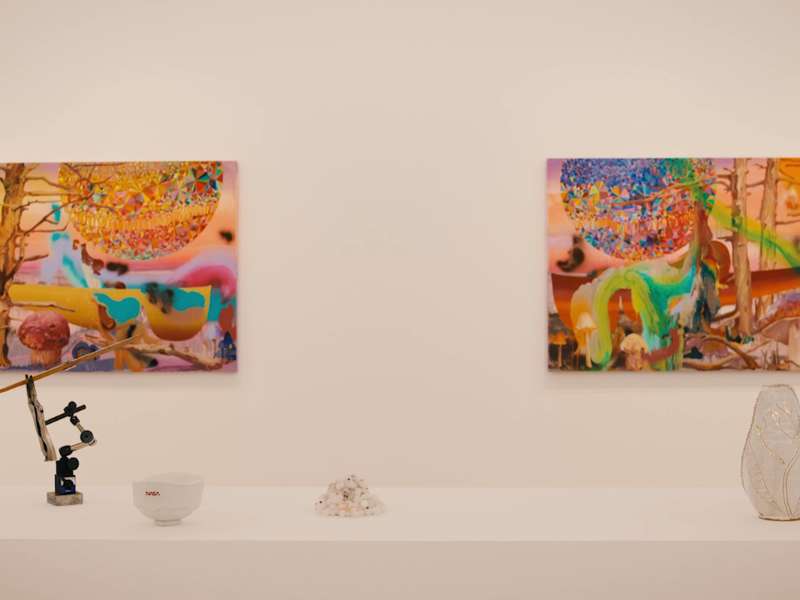
An exhibition that places storytelling at the heart of the visual experience. The title is derived from katari, meaning “to speak or tell a story,” and the suffix -arium, indicating a space dedicated to that purpose, suggesting an environment where narratives arise from the works themselves and from their encounter. The exhibition invites audiences to pay attention to the multiplicity of stories embedded in the works on view. One might listen conceptually to the intentions of the creators, imagine the inner monologue of a painter in the studio, or interpret how visitors’ reactions unfold meaning before the images and objects on display. Featured in the presentation are folding screens believed to have been commissioned by a daimyo in the Edo Period, Meiji- and Taisho-Era oil paintings, and nihonga works depicting mythological themes. Alongside these historical works are prints by Ben Shahn and segments of scrolls that once formed unified narratives, such as Detached Segment from the Deeds of the Zen Masters and Detached Segment of Caricatures of Animals. The arrangement of the works allows viewers to discern relationships and contrasts across historical periods and artistic languages, yielding a rich chorus of voices and perspectives. In this “storytelling space,” images do not stand alone but respond to one another, encouraging visitors to imagine the contexts and narratives behind artistic forms. Katarium is not a simple chronological anthology but a reflection on how art narrates, evokes, and transmits meaning across different epochs and cultures.



.jpg/jcr%3Acontent)
-(1).jpg/jcr%3Acontent)