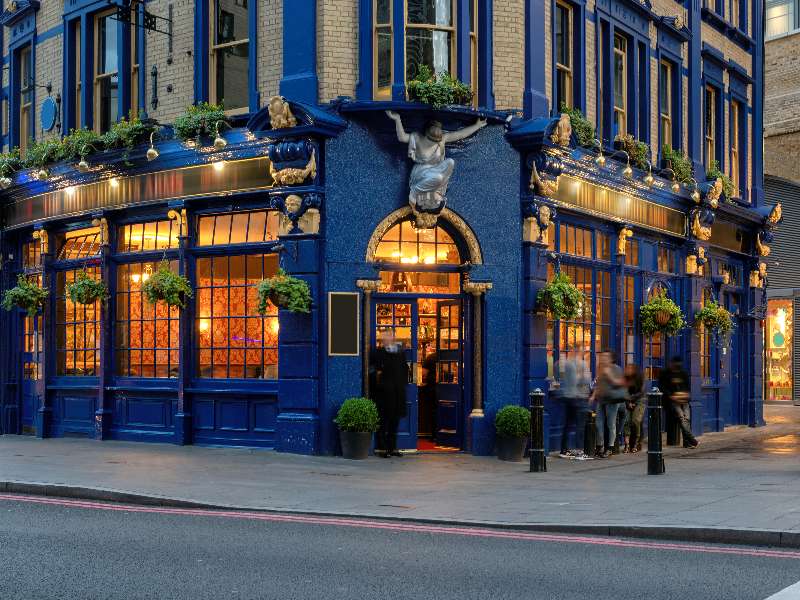
Her parents dreamed of a serene life for her as a teacher. But Barbara Mary Quant was ready to shake the old world of her birth. At 16, she left her home in Blackheath, in the suburbs of London, for a life of liberty and extravagance with aristocrat Alexander Plunket Greene, whose mother was a cousin of philosopher Bertrand Russell. Alexander bought their first house. It was on Kings Road and, thanks to Mary, it would become the epicentre of Swinging London. In the basement, they opened a restaurant and, on the ground floor, Bazaar, the first fashion boutique of Mary Quant. The times were ripe for an explosion of liberty - while the Beatles and The Rolling Stones were rocking the capital, she invented the mini-skirt on Kings Road. A handful of cloth was more pointed than any feminist manifesto - women were finally free to jump, dance, show themselves off or simply run for the bus unfettered. Success is immediate. “Shorter, shorter,” say clients as they try them on at Mary’s shop and the seam gets higher and higher. Many will contest the skirt as actually being Mary’s revolutionary invention but the name was certainly all hers - mini-skirt - inspired by another cult object of the time, the Mini Minor, the car which Mary had chosen for herself. “The true inventors of the mini-skirt are the girls you see on the street,” she concluded in her usual understated British style, as her cloths made their way around the world showing off the skinny legs of former hairdresser Twiggy. But that wasn’t enough for her - she also created wildly colourful stockings, user-friendly cosmetics and the scandalous hot pants.
The Royal Academy in London presents a major retrospective devoted to Michaelina Wautier, a seventeenth-century Flemish painter long overlooked by art history. Portraits, mythological scenes and allegories reveal an artist working with full independence across genres.
The Design Museum in London presents the first international retrospective of Nigo, a journey through three decades that reshaped the relationship between streetwear, luxury and global pop culture.
The National Gallery presents an exhibition on Ferdinand Georg Waldmüller’s landscapes. The show highlights his direct observation of nature and a rigorous approach to composition. Light, seasons and structure define a modern vision of the landscape.
V&A East opens with an exhibition exploring 125 years of Black music in Britain. From jazz to grime, the show traces genres, scenes and generations. Music emerges as a driving force in shaping British cultural identity.