A Masterpiece as a Trophy - The Secret of Apsley House
위치: Apsley House
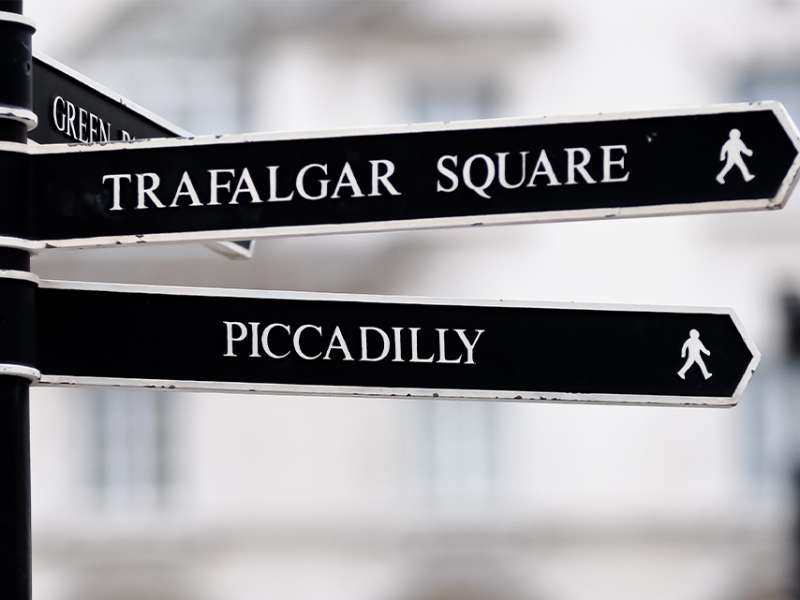
주소: 149 Piccadilly, London W1J 7NT
His name is tied to the Battle of Waterloo which, in 1815, marked the defeat of Napoleon. But not everybody knows that Lord Arthur Wellesley, first Duke of Wellington, was also a refined collector. In his Hyde Park home, long known simply as “Number One, London”, he gathered an extraordinary number of artworks, which, today, are an authentic treasure. Pieter Paul Rubens, Diego Velàsquez, Correggio, Thomas Lawrence are just some of the names on display at the luxurious Apsley House. Around the paintings are also precious sculptures, rare antique furnishings, elaborate pieces of fine metals and stunningly valuable ceramic pieces - many are gifts that Wellington received from European sovereigns for having neutralised such a dangerous common enemy. However, there is one work that is truly emblematic of this special place - the statue of Napoleon as Mars the Peacemaker, sculpted by the great Antonio Canova. Created as a celebrative portrait of the Emperor, it has monumental dimensions and shows Napoleon totally nude, as was the classical tradition. However, the Emperor didn’t care for it. He feared being ridiculed by his own troops and chose to hide it in the basement of the Louvre, draped under a drop-cloth. Yet, after the Battle of Waterloo, the sculpture became a trophy of the victor - the Duke of Wellington.
For the first time, all nine known painted portraits by Jan van Eyck are brought together at the National Gallery in London. An exhibition that explores the birth of the modern portrait in fifteenth-century Northern Europe. Between identity, psychology and new research, the faces of a changing world.
A major retrospective revisits the artistic and personal partnership between two central figures of the Bloomsbury Group, restoring their work to a decisive place within British modernism.
At the Royal Albert Hall on 4 and 5 April 2026, the film Interstellar returns to the big screen with Hans Zimmer’s score performed live, transforming the screening into an immersive symphonic experience.
At the Saatchi Gallery, a group exhibition explores the domestic space as an emotional archive. Everyday objects, fragments and gestures become traces of memory and transformation. A restrained exhibition reflecting on the relationship between intimacy and contemporary narrative.