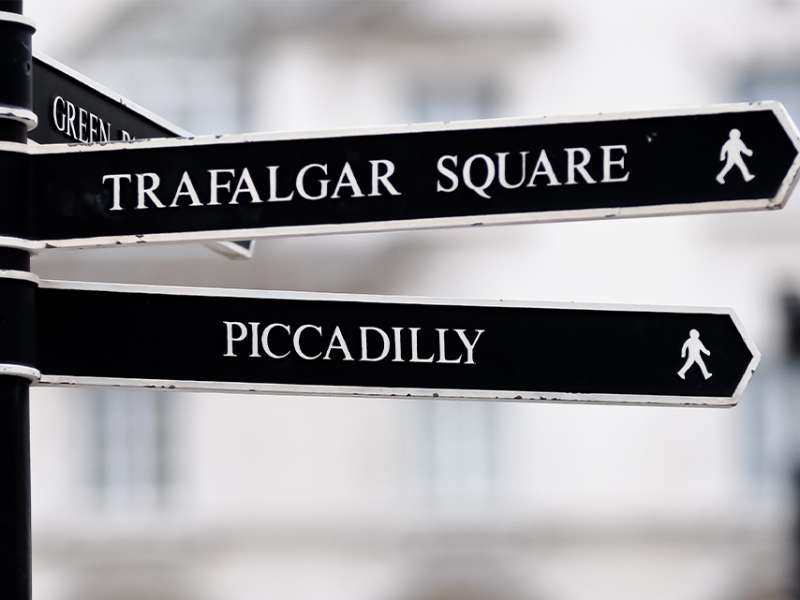
The atmosphere is that of an old novel, yet the heart of a modern metropolis pulses all around us. Right near the highly-central Leicester Square, Goodwin’s Court is a secret place where time seems to have stood still. Buildings in the Georgian style, old-fashioned store fronts, bow windows from the 1700s and gaslights offer an unexpected view of London. And to think that in the ‘30s, this street connecting St Martin’s Lane and Bedfordbury escaped demolition by a hair - the old buildings mentioned by Charles Dickens in Bleak House seemed an offence to the progressively modern urban landscape. Where, in the 1800s, children once ran barefoot as their parents munched green peas on their doorsteps, at the start of the new millenium, Chris Columbus found inspiration for the set of Harry Potter - it seems that Goodwin’s Court was the model for Knockturn Alley, the twin street of Diagon Alley which, in the novels of Joanne Rowling, hosts shops dedicated to witchcraft. Today, Goodwin’s is, above all, a street hosting offices and other activities connected with the world of the theatre. But when night falls, especially when it’s foggy out, don’t be surprised if you hear the padded gait of Sherlock Holmes.
An exhibition where new paintings and films by Sarah Morris examine the architectures of power and the invisible structures that shape contemporary metropolises.
A London exhibition traces Emilio Isgrò’s work across six decades, between visual poetry and conceptual art. Erasure emerges as a critical practice acting on language, knowledge and representation.
A Barbican retrospective surveys Robert Ryman’s work from the 1950s to the 2000s. Painting is presented as a material and perceptual experience based on subtle variation.

.jpg/jcr%3Acontent)