The Sunflowers of Van Gogh which Gauguin Did Not Like
位置: National Gallery
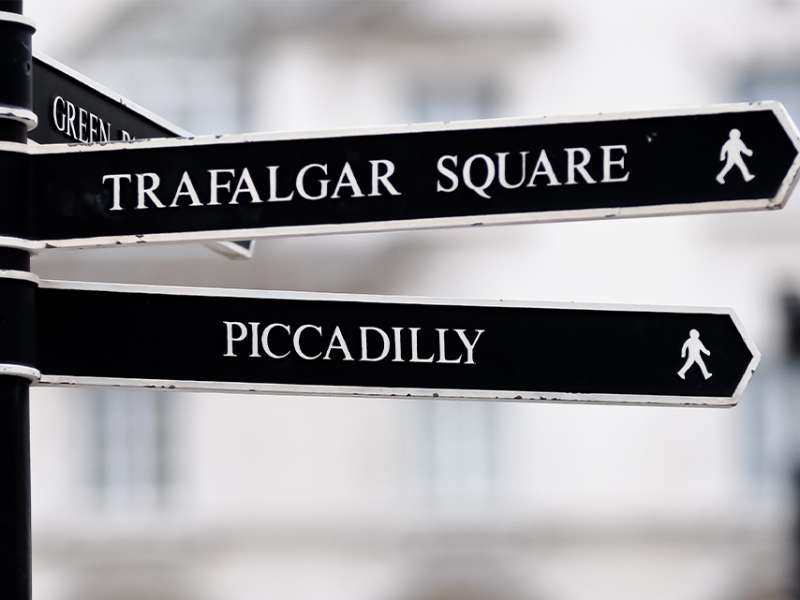
地址: Trafalgar Square, Charing Cross, London WC2N 5DN
“The sunflower is mine!” Vincent van Gogh once said, seeing in that flower the ephemeral nature of human actions or, perhaps, quite simply, an anthem to the vitality of nature. Certainly, no other artist has ever been so closely associated with a specific flower of any type. In February of 1888, Vincent van Gogh settled in Arles, in the South of France. Happy about his new life in the ancient village and of his “yellow house”, Vincent sought to convince his friend Gauguin to join him. Vincent’s dream was to establish a tiny artists’ community in Arles, of which he and his friend would act as mentors. It was during the summer, as he awaited Gauguin’s arrival, that he began to paint his celebrated series of Sunflowers in a vase. To decorate his guest-room and make a lasting impression on his friend, Vincent van Gogh thought to do a dozen paintings, including the Vase with Fifteen Sunflowers that, today, is part of the Collection of the National Gallery of London. Gauguin showed up the following autumn, but unlike Van Gogh, he found nothing interesting about Arles and he found living with Vincent impossible. The friendship between the two ended abruptly in short time and their paths diverged thereafter. Van Gogh had a nervous breakdown, while Gauguin decided to leave France and move to Tahiti in Polynesia, seeking to alter his very existence.
Wimbledon 2026 returns to London, balancing tradition with new technology such as video review. Sinner, Alcaraz and Djokovic lead a new phase of tennis on the sport’s most iconic grass courts.
A research-based exhibition at the British Museum reassesses early Netherlandish drawing as a functional tool within artistic production rather than an autonomous work. Technical studies and revised attributions reveal a collective workshop practice and trace the gradual emergence of drawing as an independent medium.
A Barbican retrospective surveys Robert Ryman’s work from the 1950s to the 2000s. Painting is presented as a material and perceptual experience based on subtle variation.
At the Royal Albert Hall on 4 and 5 April 2026, the film Interstellar returns to the big screen with Hans Zimmer’s score performed live, transforming the screening into an immersive symphonic experience.

.jpg/jcr%3Acontent)