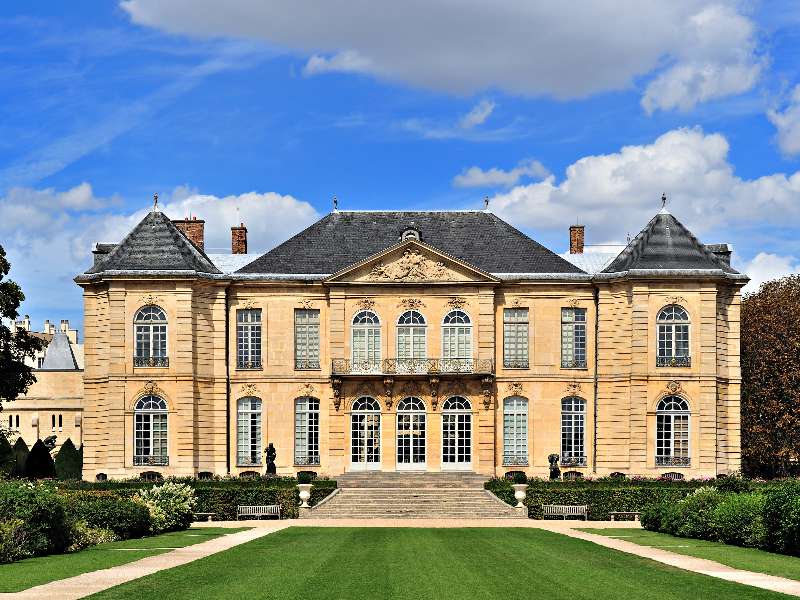
Musée Jacquemart-André in Paris devotes an exhibition to Tintoretto spanning the Venetian painter’s entire career. Timeless Tintoretto brings together around forty paintings and works on paper from public and private collections in France, Italy and elsewhere. It is the first exhibition organised in France to present a comprehensive overview of his work. Jacopo Robusti, known as Tintoretto, was born in Venice in 1518 or 1519 and spent almost his entire life there. His nickname derived from his father’s profession as a cloth dyer. His training remains partly uncertain, but by the late 1540s he had established himself on the Venetian art scene with works such as The Miracle of the Slave, painted in 1548. Over the following decades, supported by a highly active workshop, he undertook major decorative cycles for Venetian institutions, from the Scuola Grande di San Rocco to the Doge’s Palace, where towards the end of his career he worked on Paradise for the Hall of the Great Council. Tintoretto’s painting developed through an encounter between two traditions. On the one hand were drawing and the sculptural construction of the figure, with Michelangelo as a fundamental reference; on the other, the colour of the Venetian school and his engagement with Titian. Tintoretto nevertheless developed a distinctive language based on dramatic foreshortening, figures in motion, strong contrasts of light and rapid brushwork, a quality already described by his contemporaries as prestezza. The Paris exhibition is organised thematically and includes major religious compositions such as The Miracle of Saint Augustine, painted between 1547 and 1549 and held at Palazzo Chiericati in Vicenza, and The Trinity from the Galleria Sabauda in Turin, dating from around 1561-1562. In his religious paintings, Tintoretto often abandoned frontal, symmetrical compositions, directing the action along deep diagonals and giving light a decisive role in structuring the image. The exhibition also examines Tintoretto’s later reception. Admired and debated as early as the 16th century, his work continued to be studied over the following centuries and became an important reference for several French painters in the 19th century. The exhibition thus follows a career spanning almost fifty years and the subsequent circulation of a pictorial language developed in Venice but destined to exert an influence far beyond Renaissance visual culture.