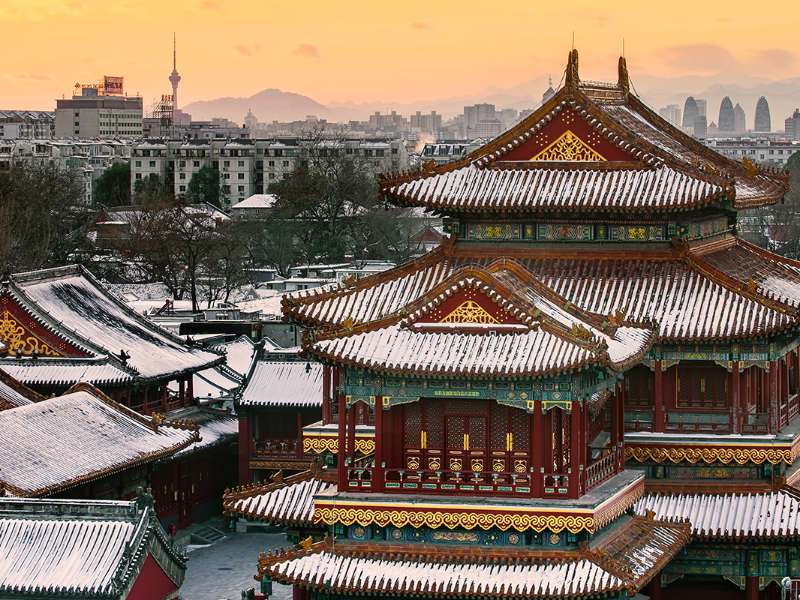
At the heart of Chinese history lies not only a place, but an idea. With Zhōng: The Cradle of China — Glory of the Central Plains Civilization, the Tsinghua University Art Museum presents a sweeping narrative that brings into focus the symbolic and cultural core of ancient China, starting from the concept of zhōng, which in Chinese means “center.” Not merely a geographical center, but an organizing principle: balance, measure, a fulcrum from which power, thought, and artistic forms radiate. Created in collaboration with the Henan Provincial Cultural Heritage Administration, the exhibition brings together around 400 works to reconstruct the decisive role of the Central Plains in the development of Huaxia civilization. From prehistory through the Song and Ming dynasties, the exhibition spans centuries of history, placing political systems, ritual and musical culture, philosophy, writing, and visual arts in dialogue. More than a conventional archaeological exhibition, Zhōng presents itself as a cultural map. Objects become witnesses to a vision of civilization grounded in harmony between social order and cosmic understanding. In this layered narrative, the past does not feel distant, but rather emerges as a living structure that continues to inform the present - reminding us that the “center” is, above all, a cultural construction.

.jpg/jcr%3Acontent)
.jpg/jcr%3Acontent)
.jpg/jcr%3Acontent)
.jpg/jcr%3Acontent)