Programme: Tue / Wed / Thu / Sun 10 am - 6 pm | Fri / Sat 10 am - 8 pm | Mon closed
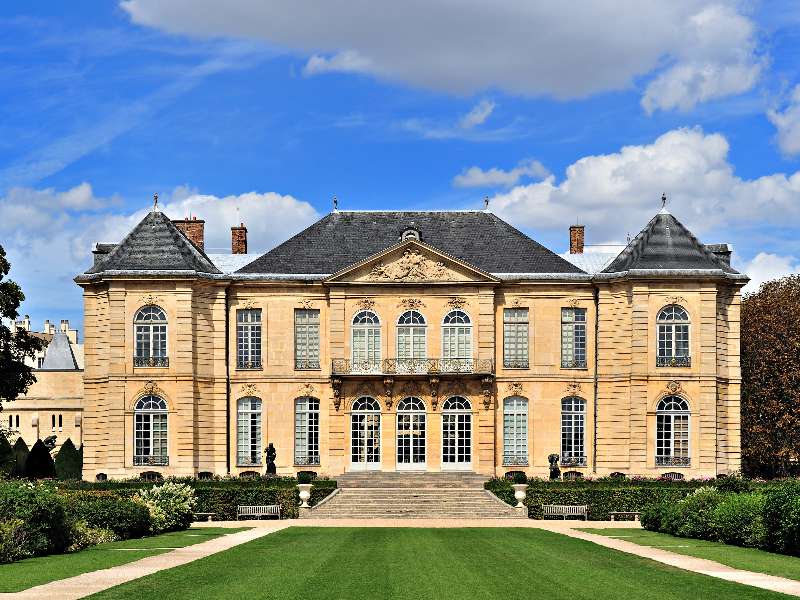
Location: Petit Palais
Adresse: Avenue Winston Churchill
At the Petit Palais in Paris, Visionaries gives Prune Nourry an unusual assignment: not simply to present a new body of work, but to bring back into view a constellation of women sculptors largely forgotten by art history. The French artist transforms the museum into a space where past and present meet, creating an exhibition that combines historical research with contemporary artistic practice. Over the course of a year, three art historians reconstructed the lives of eighteen women sculptors active between the late nineteenth and early twentieth centuries, gathering photographs, writings and archival documents. From this research, Prune Nourry created eighteen new sculptural portraits dedicated to figures such as Käthe Kollwitz, Hélène Bertaux, Nancy Elizabeth Prophet, Jane Poupelet, Selma Burke and even Sarah Bernhardt, remembered here not as an actress but for her work as a sculptor. Rather than celebrating forgotten names, the exhibition seeks to restore a face and a presence to artists who helped pave the way for later generations yet remained largely absent from the official narrative of art history. The project extends well beyond the exhibition galleries. Nourry's new works are installed among the Petit Palais' permanent collection, in its gardens and on the museum's forecourt, where visitors are welcomed by Mothership, a hybrid figure suspended between the body of a pregnant woman and the rusted hull of a ship. Around twenty earlier works from the artist's Holy Daughters and Venus series are also integrated into the display, creating a dialogue between her own practice and that of the sculptors who preceded her. One of the exhibition's most distinctive features is a visual treasure hunt. Small white marble eyes with black pupils are embedded both in Nourry's plaster busts and in the pedestals of selected historical sculptures throughout the museum. Visitors are invited to discover them as they move through the galleries, following a thread that connects works from different centuries. The choice of plaster is equally significant: almost seventy percent of the Petit Palais' sculpture collection consists of studio plaster casts, many of which survived while their bronze counterparts have disappeared. The exhibition also begins with a striking fact about the museum's own collection. Women are everywhere as subjects, allegorical figures or models, yet they are largely absent as creators: only four percent of the works are by women, and just four women sculptors are represented in the permanent collection. Visionaries takes this imbalance as its starting point, asking how artistic memory is constructed and why certain stories have remained outside the frame for so long.
The Musée des Arts Décoratifs in Paris presents Rafael Pavarotti’s first exhibition in France, bringing together over two hundred photographs. Fashion, portraits and advertising campaigns reveal a practice shaped by colour and the representation of Black and Indigenous bodies.
More than 300 photographs trace nearly two centuries of the world's most famous museum. From masterpieces to hidden spaces, the exhibition reveals how the Louvre became one of history's most photographed and reimagined cultural landmarks.
Andy Warhol, the unseen face of the father of Pop Art
The Musée du Luxembourg presents a major exhibition exploring more than four decades of Andy Warhol's drawings, revealing the hand-drawn practice that shaped his artistic vision long before and beyond Pop Art. Around 150 works offer a fresh perspective on one of the twentieth century's most influential artists.
With Waterfall, Jennifer Guidi presents a new series of paintings at Gagosian Paris inspired by waterfalls, oceans and inner landscapes. Balancing abstraction and contemplation, nature becomes a sensory experience shaped by light, colour and texture.