Celebrating Miles Davis requires more than simply playing his music: it takes the courage to reinvent it. This is exactly what Paolo Fresu does with Kind of Lives, the new project bringing the universe of one of the twentieth century’s most revolutionary musicians to the Roma Jazz Festival. Born exactly a century ago, Davis was far more than a legendary trumpeter. Over almost fifty years, he continually rewrote the rules of jazz, moving from cool jazz and modal experimentation to the electric revolution of Bitches Brew. Albums such as Kind of Blue left a legacy that extends far beyond the boundaries of jazz. Taking up that legacy is Fresu, the Sardinian trumpeter with an instantly recognisable sound, a leading figure on the international jazz scene and the artist behind more than 350 recordings. Kind of Lives grew out of the theatrical production Kind of Miles, written and performed by Fresu himself, but takes on a new form on stage. The musicians are ideally divided into two ensembles: one looks back to the Miles Davis of the 1950s, while the other explores his later musical revolution. Rather than a nostalgic tribute, this is a journey into Davis’s most enduring lesson: to keep changing without ever losing your own voice.
Opéra Bastille presents a new series of performances of Gioachino Rossini's The Barber of Seville, directed by Damiano Michieletto. The production transforms eighteenth-century Seville into a contemporary theatrical space filled with urban energy, physical comedy, and continuous movement.
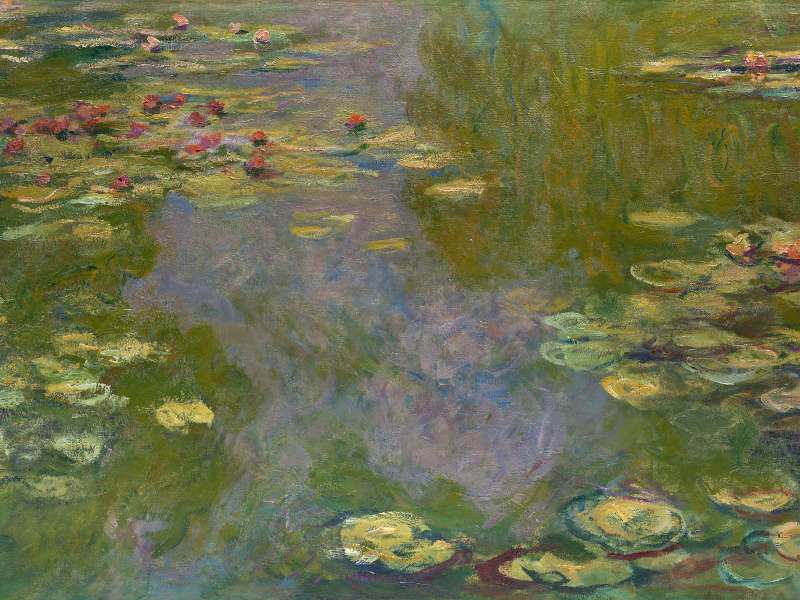
At the Musée de l'Orangerie, the centenary of Monet's Water Lilies becomes an opportunity to revisit 1927. More than 150 works, films, photographs and documents explore a year in which art, cinema, design and society intersected amid the avant-garde, jazz, modernity and political tensions.
A major exhibition dedicated to Gustave Fayet, collector, painter, and patron who helped establish artists such as Gauguin, Cézanne, and Redon. A journey to discover a key figure, yet one who has remained in the shadows for too long, in the birth of modern art.
At the Petit Palais, Prune Nourry pays tribute to eighteen women sculptors overlooked by art history. New sculptures, archival research and site-specific installations engage with the museum's collection, exploring memory and the visibility of women artists.