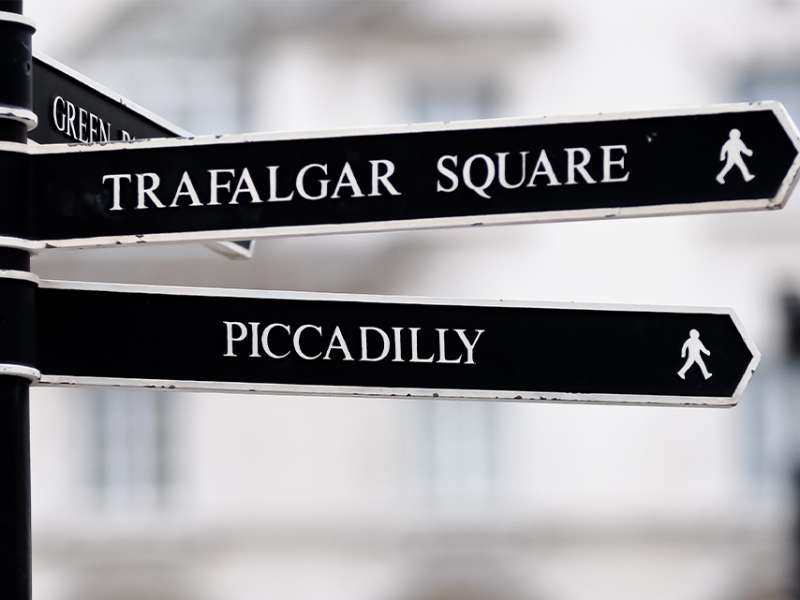
주소: Trafalgar Square, Charing Cross, London WC2N 5DN
In the Bruges of the 1400s, the Italian Arnolfini family must have been rather important in order to have none other than the top painter of the Flemish tradition, local artist Jan Van Eyck - who was also the official painter of the Court of Philip the Good, the Grand Duke of Burgundy - to carry out their portraits. Van Eyck put all his expertise in oil painting to work in portraying a number of select items to celebrate the wealth of the Italian couple. From the luxurious furnishings of the room to the elegantly tailored garments of the couple - every detail, precisely depicted, suggests their abundant means. But who are the two people depicted in the painting? Actually, very little is known about the couple. Most probably, it is Giovanni di Nicolao of Arnolfini, known as Giannino or Jehannin, who would have been around 34 years of age in 1434. The woman is most likely his second wife. Quite noteworthy is the large round mirror at the centre of the composition which shows the convex reflection of the room, but also two men entering the room through a door behind the couple. Above the mirror is written Johannes de Eyck fuit hic. 1434 (Jan van Eyck was here. 1434). Could it be Van Eyck and his assistant entering the room to carry out the portrait? The masterpiece has been at the National Gallery since 1842.
V&A East opens with an exhibition exploring 125 years of Black music in Britain. From jazz to grime, the show traces genres, scenes and generations. Music emerges as a driving force in shaping British cultural identity.
The Design Museum in London presents the first international retrospective of Nigo, a journey through three decades that reshaped the relationship between streetwear, luxury and global pop culture.
At the National Portrait Gallery in London, Tim Walker reconsiders his fairy-tale imagery through the lens of a real community. Portraits, staging and narrative create a universe where identity and affection become a collective story. An exhibition that moves portraiture towards a space that is both poetic and political.

.jpg/jcr%3Acontent)