

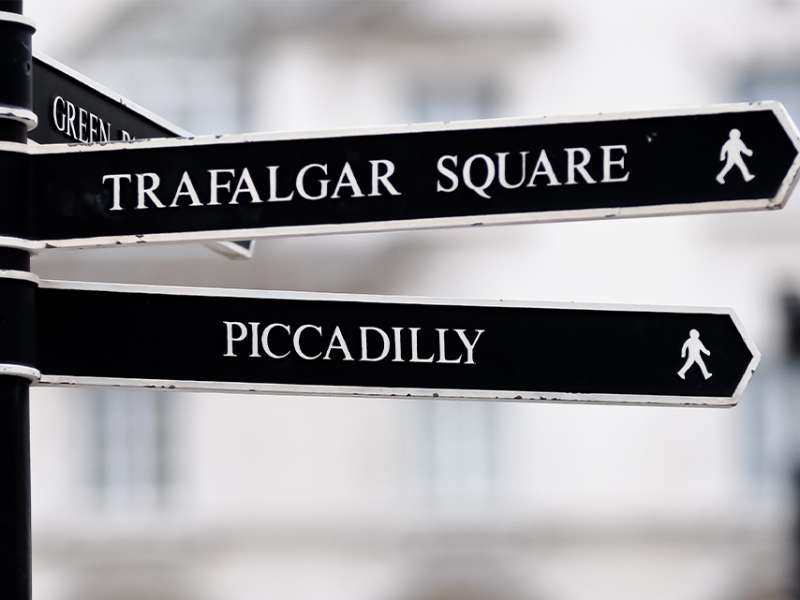

Адрес: Trafalgar Square, Charing Cross, London WC2N 5DN
In the Bruges of the 1400s, the Italian Arnolfini family must have been rather important in order to have none other than the top painter of the Flemish tradition, local artist Jan Van Eyck - who was also the official painter of the Court of Philip the Good, the Grand Duke of Burgundy - to carry out their portraits. Van Eyck put all his expertise in oil painting to work in portraying a number of select items to celebrate the wealth of the Italian couple. From the luxurious furnishings of the room to the elegantly tailored garments of the couple - every detail, precisely depicted, suggests their abundant means. But who are the two people depicted in the painting? Actually, very little is known about the couple. Most probably, it is Giovanni di Nicolao of Arnolfini, known as Giannino or Jehannin, who would have been around 34 years of age in 1434. The woman is most likely his second wife. Quite noteworthy is the large round mirror at the centre of the composition which shows the convex reflection of the room, but also two men entering the room through a door behind the couple. Above the mirror is written Johannes de Eyck fuit hic. 1434 (Jan van Eyck was here. 1434). Could it be Van Eyck and his assistant entering the room to carry out the portrait? The masterpiece has been at the National Gallery since 1842.
Wimbledon 2026 returns to London, balancing tradition with new technology such as video review. Sinner, Alcaraz and Djokovic lead a new phase of tennis on the sport’s most iconic grass courts.
At the Saatchi Gallery, a group exhibition explores the domestic space as an emotional archive. Everyday objects, fragments and gestures become traces of memory and transformation. A restrained exhibition reflecting on the relationship between intimacy and contemporary narrative.
The Royal Academy in London presents a major retrospective devoted to Michaelina Wautier, a seventeenth-century Flemish painter long overlooked by art history. Portraits, mythological scenes and allegories reveal an artist working with full independence across genres.
A Barbican retrospective surveys Robert Ryman’s work from the 1950s to the 2000s. Painting is presented as a material and perceptual experience based on subtle variation.