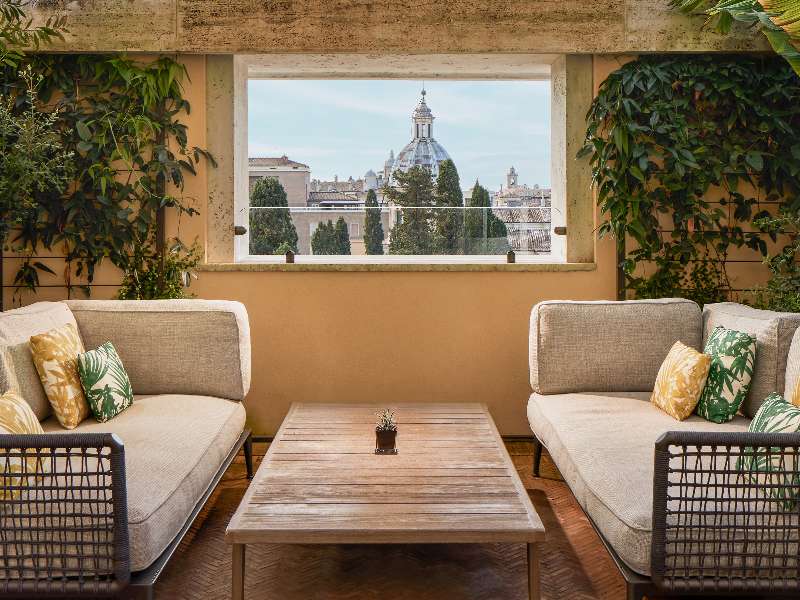
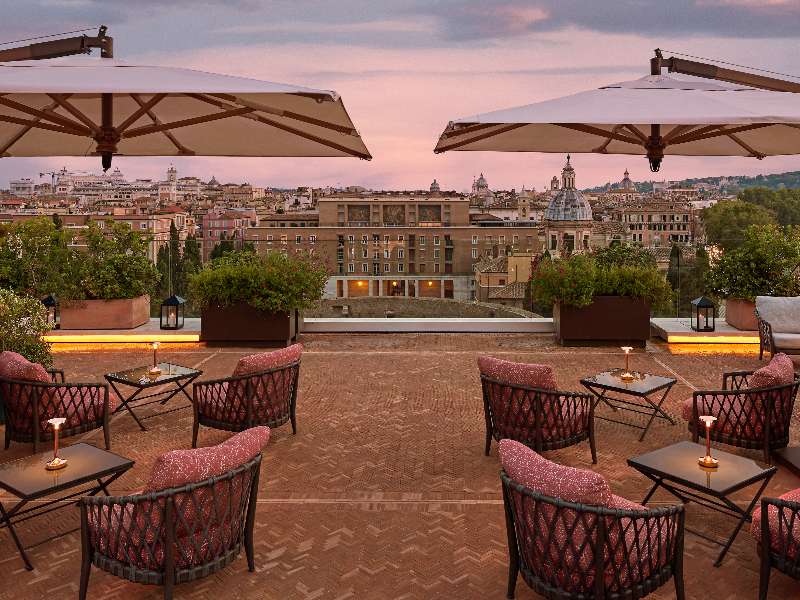
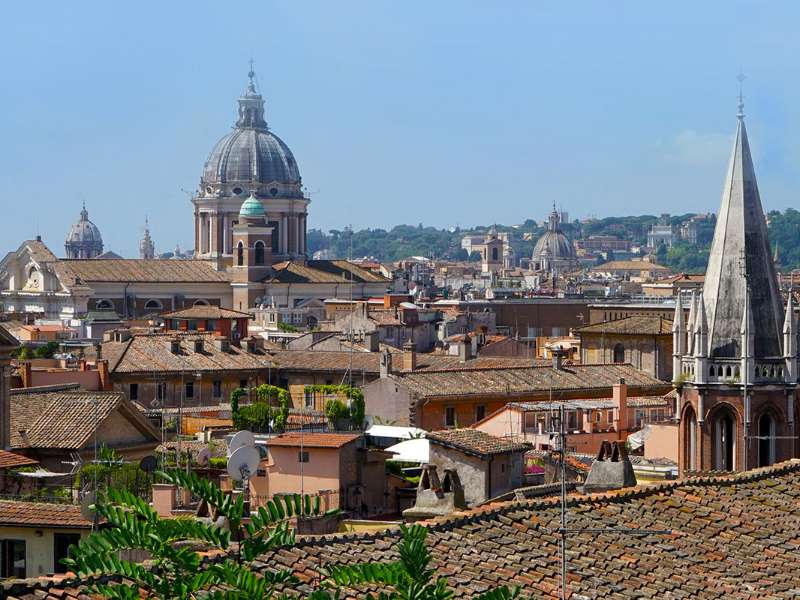
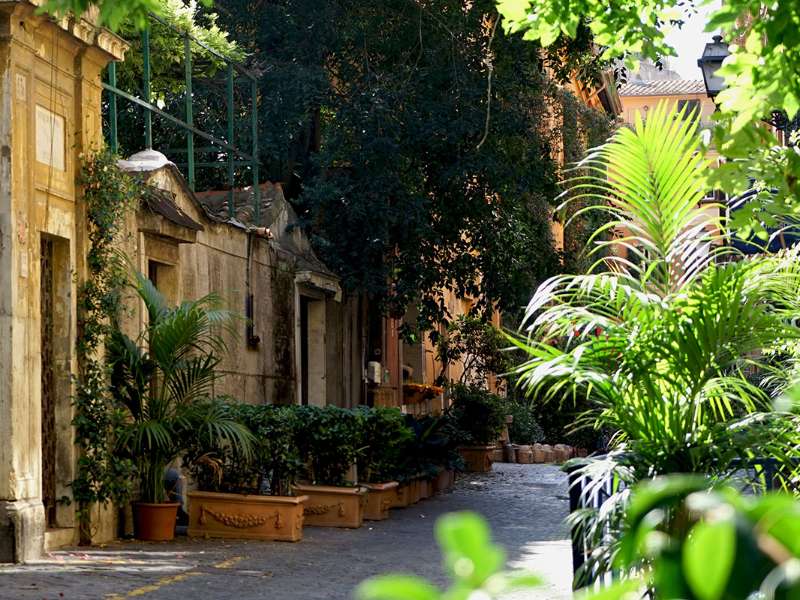
Perched on the Pincian Hill, offering one of the most evocative views over Rome, Villa Medici is not merely a splendid historic residence: it is a living place where art, history, and contemporary creation have been in dialogue for centuries. Today, the Villa is home to the Accademia di Francia a Roma, one of the oldest artistic residences in Europe, welcoming artists, researchers, and the public through exhibitions, concerts, guided visits, and cultural programs open to the city. The building we see today fully preserves the character of a Florentine Renaissance villa transplanted to Rome. The austere façade facing Trinità dei Monti is counterbalanced by the theatrical inner façade, designed by Bartolomeo Ammannati for Cardinal Ferdinando de’ Medici: a luminous loggia opens onto the gardens, adorned with ancient bas-reliefs, precious marbles, and symbols celebrating the power and refined taste of its patron. Inside, frescoed rooms such as the Room of the Elements and the Room of the Birds convey the cultivated elegance of the late sixteenth century, while more unusual spaces - like the evocative “Turkish” Room - bear witness to the layering of different periods and sensibilities. A fundamental chapter in the Villa’s recent history is linked to the figure of Balthus, who served as its Director from 1961 to 1977. The painter-restorer restored a unique atmosphere to the building through delicate wall decorations, a vibrant chromatic patina, and refined furnishings composed of antique furniture and custom-designed objects. His intervention was not merely a conservation effort, but a true poetic reinterpretation of the spaces, which remains one of the most fascinating aspects of a visit today. The historic garden, covering nearly seven hectares, is an integral part of the experience. Inspired by Tuscan gardens, it alternates rigorous geometric layouts with wilder areas: the central forecourt, labyrinthine hedge parterres, the holm oak grove, and avenues lined with ancient sculptures. Among centuries-old pines, fountains, obelisks, and the famous group of the Niobids, the walk leads to one of the most breathtaking viewpoints in Rome. The history of Villa Medici, however, has its roots in antiquity. This site once hosted the gardens of the Roman General Lucullus, later imperial residences, including that of Emperor Honorius. During the Renaissance, Ferdinando de’ Medici transformed the site into a villa dedicated to celebrating art and collecting. In 1803, thanks to Napoleon Bonaparte, the Villa became the seat of the Accademia di Francia a Roma, welcoming generations of artists destined to shape the history of European art, from Jean-Auguste-Dominique Ingres to Jacques-Louis David. Ingres wrote that “Rome is the school of the world, and Villa Medici is its silent heart”: a phrase that still seems to capture the spirit of the place today. Visiting Villa Medici means entering a space suspended between past and present, where history is not merely contemplated, but continuously reinvented. It is a place to be discovered slowly, guided by the light, the silence of the gardens, and the echo of centuries of artistic creation.
The tropicalismo pioneer revisits a legendary career through rhythm, poetry, and memory, joined on stage by a family superband.
At Palazzo Barberini, a major exhibition revisits the dialogue between an artist and a pope that reshaped the European art.

.jpg/jcr%3Acontent)

.JPG/jcr%3Acontent)
.jpg/jcr%3Acontent)
.jpg/jcr%3Acontent)
.JPG/jcr%3Acontent)
.JPG/jcr%3Acontent)
.JPG/jcr%3Acontent)