


A Masterpiece as a Trophy - The Secret of Apsley House
Location: Apsley House
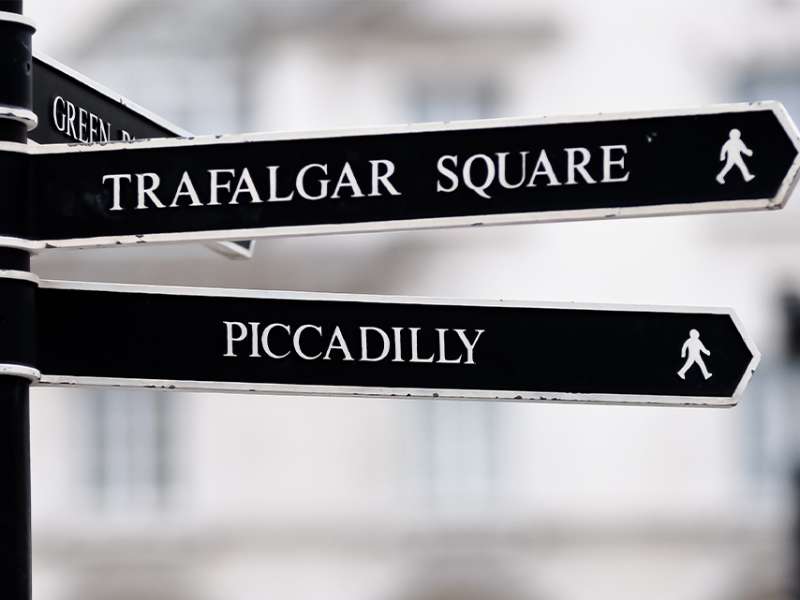
Adresse: 149 Piccadilly, London W1J 7NT
His name is tied to the Battle of Waterloo which, in 1815, marked the defeat of Napoleon. But not everybody knows that Lord Arthur Wellesley, first Duke of Wellington, was also a refined collector. In his Hyde Park home, long known simply as “Number One, London”, he gathered an extraordinary number of artworks, which, today, are an authentic treasure. Pieter Paul Rubens, Diego Velàsquez, Correggio, Thomas Lawrence are just some of the names on display at the luxurious Apsley House. Around the paintings are also precious sculptures, rare antique furnishings, elaborate pieces of fine metals and stunningly valuable ceramic pieces - many are gifts that Wellington received from European sovereigns for having neutralised such a dangerous common enemy. However, there is one work that is truly emblematic of this special place - the statue of Napoleon as Mars the Peacemaker, sculpted by the great Antonio Canova. Created as a celebrative portrait of the Emperor, it has monumental dimensions and shows Napoleon totally nude, as was the classical tradition. However, the Emperor didn’t care for it. He feared being ridiculed by his own troops and chose to hide it in the basement of the Louvre, draped under a drop-cloth. Yet, after the Battle of Waterloo, the sculpture became a trophy of the victor - the Duke of Wellington.
From theatre and opera to Olympic ceremonies, concerts and public installations, Es Devlin has helped shape the visual culture of recent decades. A major exhibition at London's Design Museum explores her work through models, sketches and newly commissioned projects.
Tate Modern traces the international history of Pictorialism, from the 1880s into the 20th century.From Alfred Stieglitz to Ho Fan, photographers across Europe, America, Asia, Africa and Australia explored new possibilities for the image.
At White Cube, the Hong Kong-born artist unveils a new series of paintings exploring the fragility of human relationships and the search for belonging. Through suspended figures and pared-back compositions, Lai transforms introspection into a meditation on the contemporary human condition.
Following his participation in the Venice Biennale, Louis Fratino presents a new body of paintings at David Zwirner London exploring intimacy and human relationships. Through domestic interiors and quietly observed figures, his work reveals the poetic power of closeness.