From the Palette to the Table - the Origins of Milanese Risotto
位置: Duomo di Milano
地址: Piazza Duomo
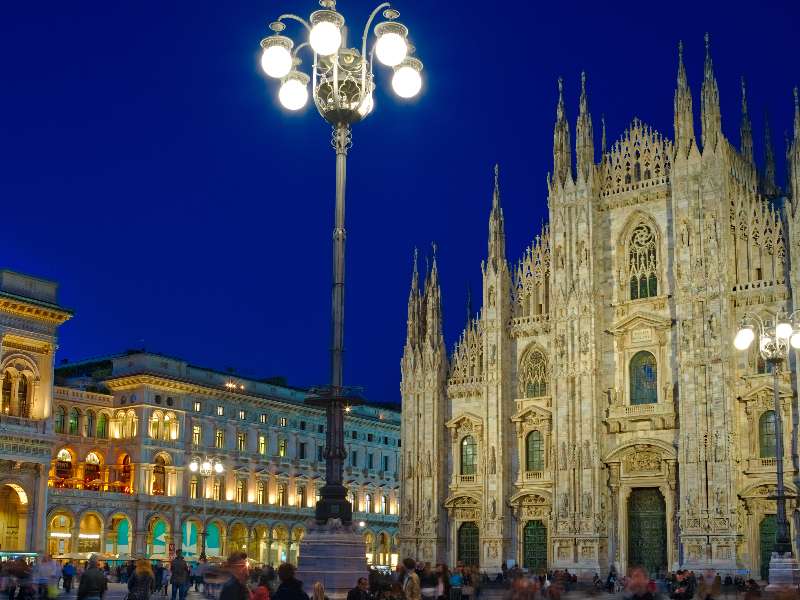
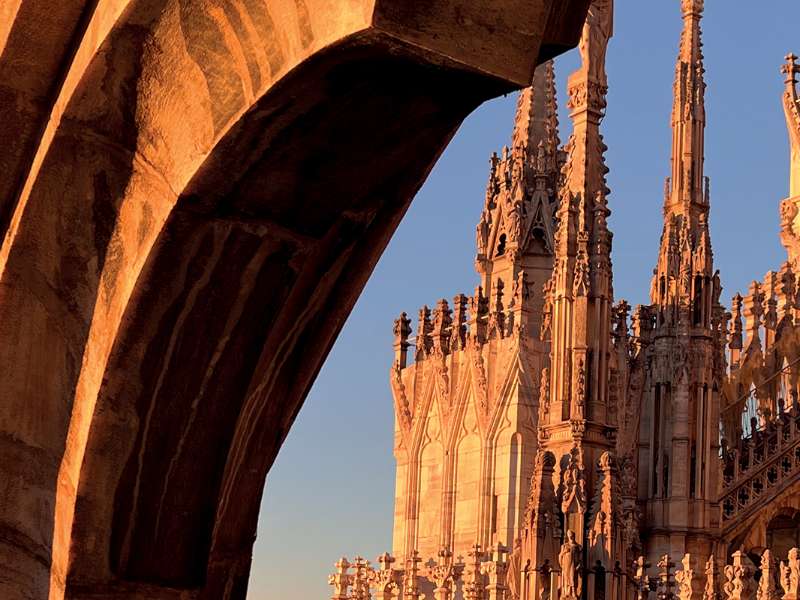
It wasn’t a chef but a painter who invented Milanese Risotto. According to a manuscript kept at the Trivulziana Library, the star dish of Milanese cuisine dates all the way back to 1574. It speaks of a certain Mastro Valerio of Flanders, who came to Milan from Leuven to work on the windows of the Duomo which was under construction. It seems that his assistant was given to adding a pinch of saffron to his paints to make them more vivid. We don’t know anything more about him than his nickname - Zafferano (Saffron), of course. Valerio of Flanders was so bewildered by this tendency, that he remarked that his helper would probably throw saffron into his food if given the chance. And so it was - the day of the painter’s daughter’s wedding, Zafferano put some of the spice in the rice which, until then, had always been seasoned simply with butter. The legend has it that, first, the guests were enthralled by the colour of the dish, then by its fragrance and flavour. The discovery of the young artist was a success - from there on, saffron became an official part of Milanese cooking.
From Ceramics to the Teatrini: the Art of Lucio Fontana
Works from the 1950s and 1960s offer a broad view of Lucio Fontana’s artistic journey, reaching well beyond his celebrated signature style of the Cuts (Tagli).
A major exhibition rediscovers Andrea Appiani, painter to Napoleon and Master of Neoclassicism, through portraits, frescoes, and drawings from Italian and international collections.
Twelve restored plaster busts by Antonio Canova, discovered in a villa in Veneto, are the highlight of a new exhibition at Milan’s Pinacoteca di Brera, celebrating Neoclassical sculpture and the return of the marble Vestale.
Classical bodies and synthetic figures in a hybrid landscape: Andrea Crespi blends painting, sculpture, digital works and AI to redefine beauty, identity, and the future.