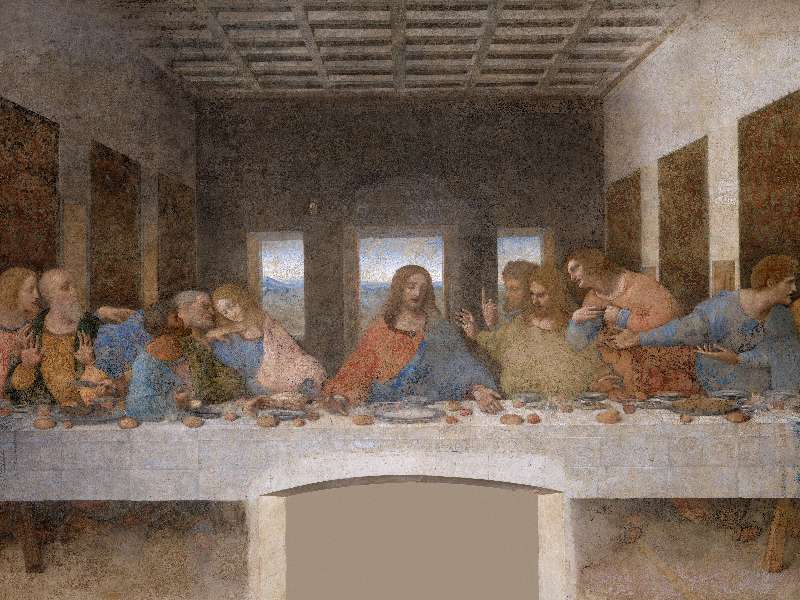
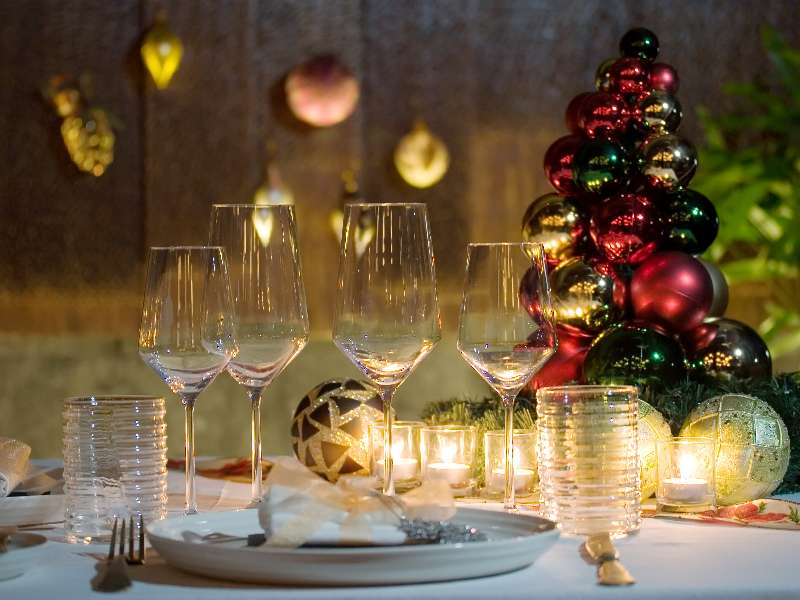
As early as 1549, Cristoforo di Messisbugo, a chef from Ferrara, cites the recipe of a sweet bread made from flour, butter, sugar, eggs and milk, created in Milan. This is the ancestor of today’s famed panettone. The legend boasts of the regal origins of this sweet, the result of a Christmas Eve culinary error in the kitchens of Ludovico Sforza, Duke of Milan. The chef of the Sforza residence apparently burned the dessert planned for the banquet and the scullery boy, known simply as “Toni”, seeking to remedy the tragedy, decided to use the yeast he had put aside for his own Christmas. He worked it over and over again with flour, eggs, sugar, raisins and candied fruits, until he had a light highly-risen dough and a new creation which totally amazed Sforza who, in honour of its creator, decided to call it “pan de Toni”, eventually evolving into the name “panettone”. Forgetting about the legend, the one sure thing is that the preparation of the panettone goes back to a habit of the people of the Middle Ages to furnish their tables with the richest breads on certain occasions, such as for the Christmas tradition of the “rito di ciocco”, a sort of re-enactment of the last supper. It wasn’t until 1606 that the sweet was officially mentioned in the first Milanese-Italian dictionary which speaks of a certain “panaton de danedaa”.
Overflowing baroque and withdrawing zero degree: Strozzi and Manzoni converse between impasto and Achromes, light and non-color. A study in painting’s radical freedom.
The artist’s first Italian exhibition marks 25 years of color-driven research, presenting new abstractions shaped by light, material, and unexpected harmony.
From Ceramics to the Teatrini: the Art of Lucio Fontana
Works from the 1950s and 1960s offer a broad view of Lucio Fontana’s artistic journey, reaching well beyond his celebrated signature style of the Cuts (Tagli).