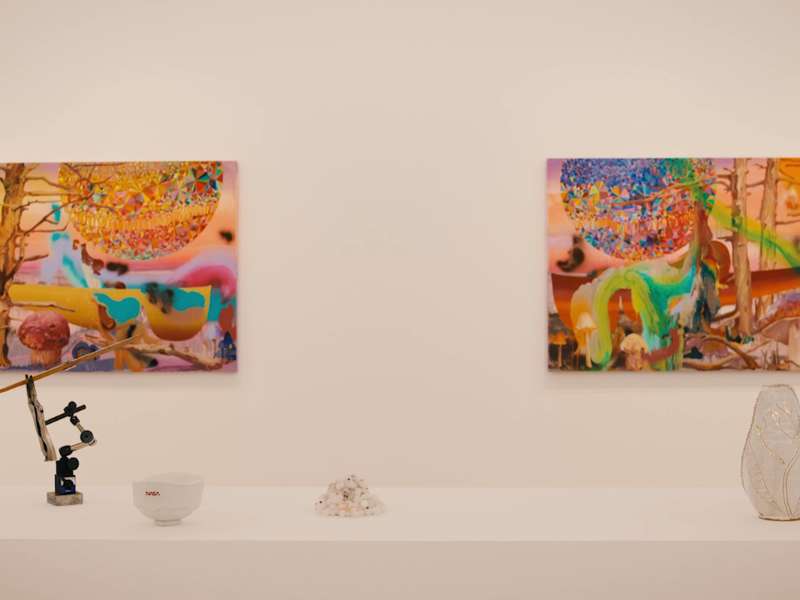
It is not the subject that leads the eye, but what makes it possible. At the Sen-Oku Hakukokan Museum Tokyo, the exhibition dedicated to Konoshima Okoku focuses on a precise question: how an image comes into being, before what it represents. This third chapter of an exhibition series contributing to the renewed attention around the artist concentrates on his use of color and painting techniques. Rather than presenting finished works alone, it opens up the intermediate stages, the materials and decisions that shape each composition. Alongside the paintings, pigments and tools are displayed, bringing to light elements usually hidden from view. Active between the late nineteenth and early twentieth century, Okoku occupies a complex position within nihonga painting, balancing natural observation with formal construction. In works such as irises and seasonal landscapes, color does not simply describe but structures space and introduces an internal rhythm. The exhibition runs in parallel with a presentation on restored artworks supported by the Sumitomo Foundation, adding another dimension to the reading: time. These works are not fixed outcomes but objects that undergo interventions, transformations and conservation processes that alter how they are perceived. What emerges is less a retrospective than an inquiry into painting itself. Color is no longer a given - it becomes an open question, something constructed, adjusted, lost and rediscovered.




.jpg/jcr%3Acontent)
-(1).jpg/jcr%3Acontent)