

العنوان: Riverside Building, County Hall, Bishop's, London SE1 7PB
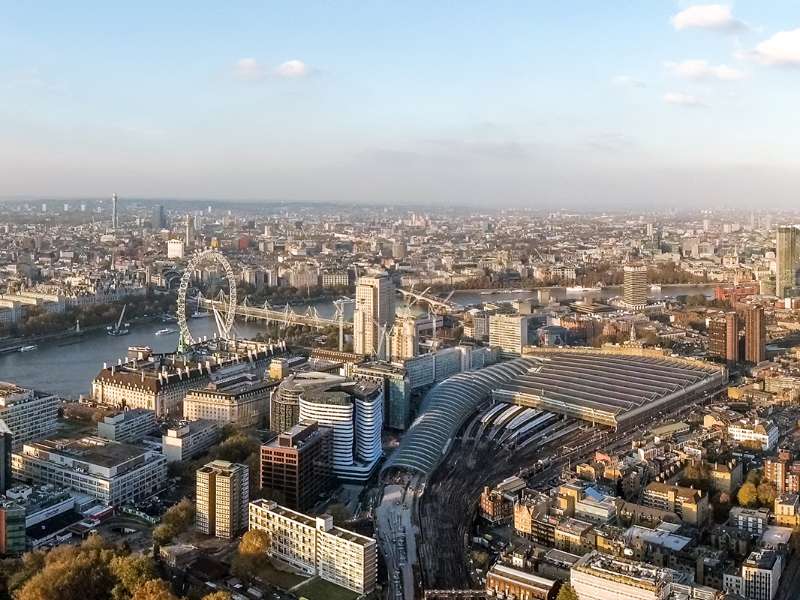
When the gigantic Great Wheel of London was built for the Empire of India Exhibition, later being used for the Imperial Austrian Exhibition as well, its 94 metres dwarfed any other building. When this behemoth was inaugurated at Earl’s Court on July 17, 1895, it was the largest ferris wheel on Earth, as well as London’s tallest structure. Besides its human passengers, the wheel was also a popular hangout for birds. In fact, in 1900, a cleaning person found a Goldcrest - the smallest bird in Great Britain - roosting inside one of the Wheel’s cars. The wheel was designed by Walter Basset, who was inspired by the 1893 ferris wheel of Chicago, which ran on steam and had forty cars to carry as many people and was considered an engineering marvel at the time. But by the end of the century, the curiosity regarding the wheel faded and it became a silent mostly-unused fixture. It was demolished in 1907 after having carried around 2.5 million passengers during its career. But its end came when, thanks to a malfunction, 74 people were left trapped for four-and-a-half hours. Its steel was sent to South Wales, where it was converted into containers for mustard and cookies.
Caravaggio's famous painting arrives in the UK for the first time at the Wallace Collection in London, in dialogue with ancient sculptures from the Giustiniani collection. This exhibition intertwines sensuality and power, light and matter, rediscovering the challenge between painting and sculpture in 17th-century Rome.
Cirque du Soleil is ready to renew its beloved New Year's Eve tradition in London, bringing one of its most acclaimed shows: OVO. The production will make its long-awaited return to the historic Royal Albert Hall for a limited run, transforming the iconic arena into a microcosm teeming with life, energy, and breathtaking acrobatics.
Marie Antoinette: The Queen of Style Who Never Goes Out of Fashion
Featuring more than 250 works, from personal jewels and court dress to creations by Dior, Chanel and Vivienne Westwood, the show traces Marie Antoinette’s lasting impact on fashion, the decorative arts and visual culture.
At the National Gallery in London, a remarkable exhibition brings back into focus one of the most enigmatic figures of eighteenth-century British painting, George Stubbs, exploring his quiet revolution in the depiction of the horse, an animal that, for the artist, became far more than a symbol of status or aristocratic refinement.