


Man Ray: Reinventing the Image

Man Ray: Reinventing the Image
#Exhibitions
Man Ray, Giant Chess Set, 1961 | Photo: Jacqueline Hyde | Courtesy © Larkin Erdmann, Switzarland

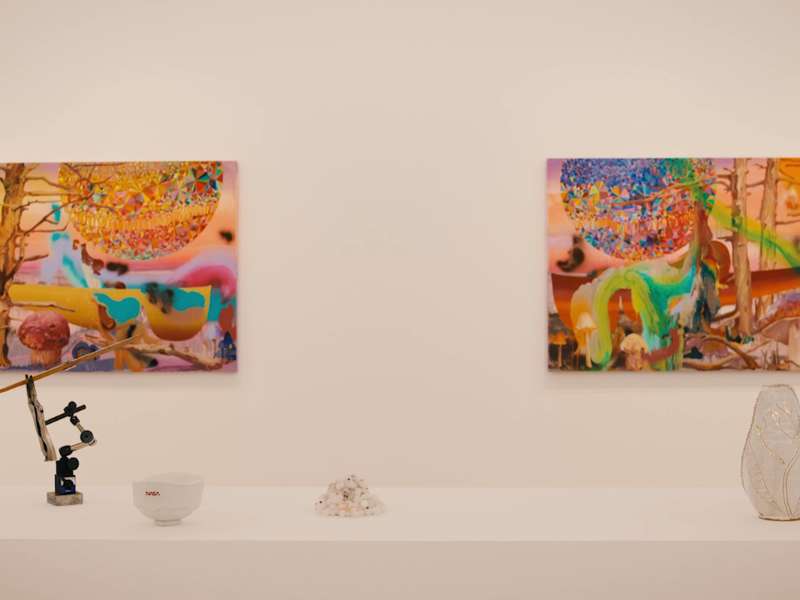
More than a century after the birth of Surrealism, Man Ray's work continues to defy definition. A photographer, painter, filmmaker, creator of objects and tireless experimenter, the American artist was one of the key figures who redefined the very concept of the image in the twentieth century. The exhibition at Take Ninagawa in Tokyo revisits this aspect of his career, presenting a selection of works that highlights the remarkable freedom with which Man Ray moved across artistic disciplines and media, in dialogue with the gallery's concurrent exhibition dedicated to On Kawara. After leaving New York for Paris in the 1920s following his Dada years, Man Ray found in the French capital the ideal environment to develop an artistic practice that would profoundly influence photography, conceptual art and modern visual culture. He became renowned for his rayographs - images created without the use of a camera - as well as for his portraits of artists and intellectuals such as Marcel Duchamp, Pablo Picasso and Lee Miller, in which photography became a space for invention rather than a mere record of reality. The exhibition invites visitors to look beyond the iconic status of his most celebrated works and rediscover his practice as a continuous process of experimentation. Each piece reflects his determination to challenge the nature of the image itself, transforming everyday objects, light and photographic processes into tools of discovery. It is precisely this spirit of experimentation that makes Man Ray's work feel so strikingly contemporary today. The dialogue with On Kawara, created through the gallery's parallel exhibitions, also reveals a less obvious but meaningful connection between the two artists. Both used art as a way of recording time and human experience, albeit through radically different approaches. While Man Ray reinvented reality through visual experimentation, Kawara turned everyday existence into a rigorous conceptual system. Together, the two exhibitions offer complementary perspectives on twentieth-century art: one driven by imagination, the other by the measurement of time.
Veronica Azzari - © 2026 ARTE.it for Bvlgari Hotel Tokyo