
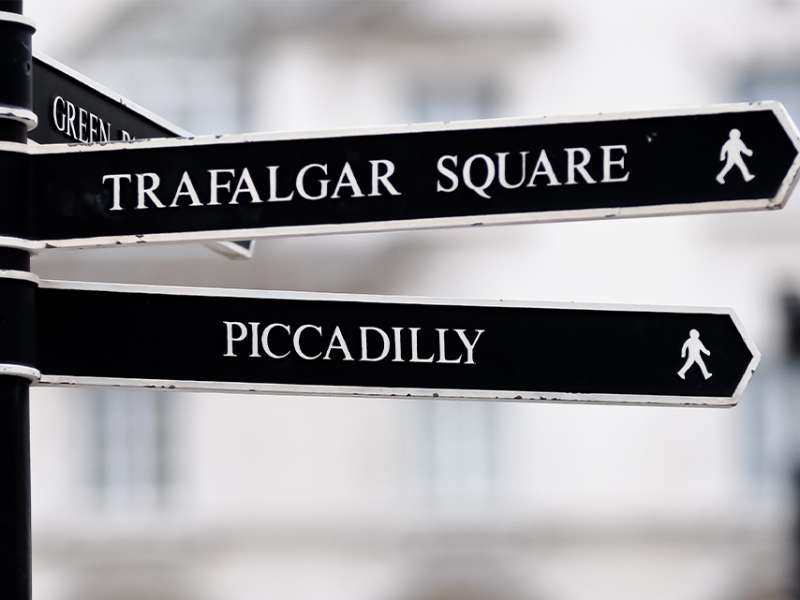
Adresse: Trafalgar Square, Charing Cross, London WC2N 5DN
In the Bruges of the 1400s, the Italian Arnolfini family must have been rather important in order to have none other than the top painter of the Flemish tradition, local artist Jan Van Eyck - who was also the official painter of the Court of Philip the Good, the Grand Duke of Burgundy - to carry out their portraits. Van Eyck put all his expertise in oil painting to work in portraying a number of select items to celebrate the wealth of the Italian couple. From the luxurious furnishings of the room to the elegantly tailored garments of the couple - every detail, precisely depicted, suggests their abundant means. But who are the two people depicted in the painting? Actually, very little is known about the couple. Most probably, it is Giovanni di Nicolao of Arnolfini, known as Giannino or Jehannin, who would have been around 34 years of age in 1434. The woman is most likely his second wife. Quite noteworthy is the large round mirror at the centre of the composition which shows the convex reflection of the room, but also two men entering the room through a door behind the couple. Above the mirror is written Johannes de Eyck fuit hic. 1434 (Jan van Eyck was here. 1434). Could it be Van Eyck and his assistant entering the room to carry out the portrait? The masterpiece has been at the National Gallery since 1842.
At London's National Gallery, Thomas Gainsborough's celebrated masterpiece meets Yinka Shonibare's contemporary reinterpretation. A dialogue across centuries that explores power, identity and the legacy of colonial history.
The first major retrospective in over fifty years dedicated to Richard Dadd, one of the most enigmatic artists of the Victorian era, invites us to look beyond his biography to rediscover the visionary power of his painting.
Tate Modern traces the international history of Pictorialism, from the 1880s into the 20th century.From Alfred Stieglitz to Ho Fan, photographers across Europe, America, Asia, Africa and Australia explored new possibilities for the image.
At White Cube, the Hong Kong-born artist unveils a new series of paintings exploring the fragility of human relationships and the search for belonging. Through suspended figures and pared-back compositions, Lai transforms introspection into a meditation on the contemporary human condition.